By Kuda Pembere
Zimbabwe needs to invest more in modern health infrastructure, equipment and infection prevention systems if it is to reduce the number of newborns dying in the first weeks of life, the Ministry of Health and Child Care has said.
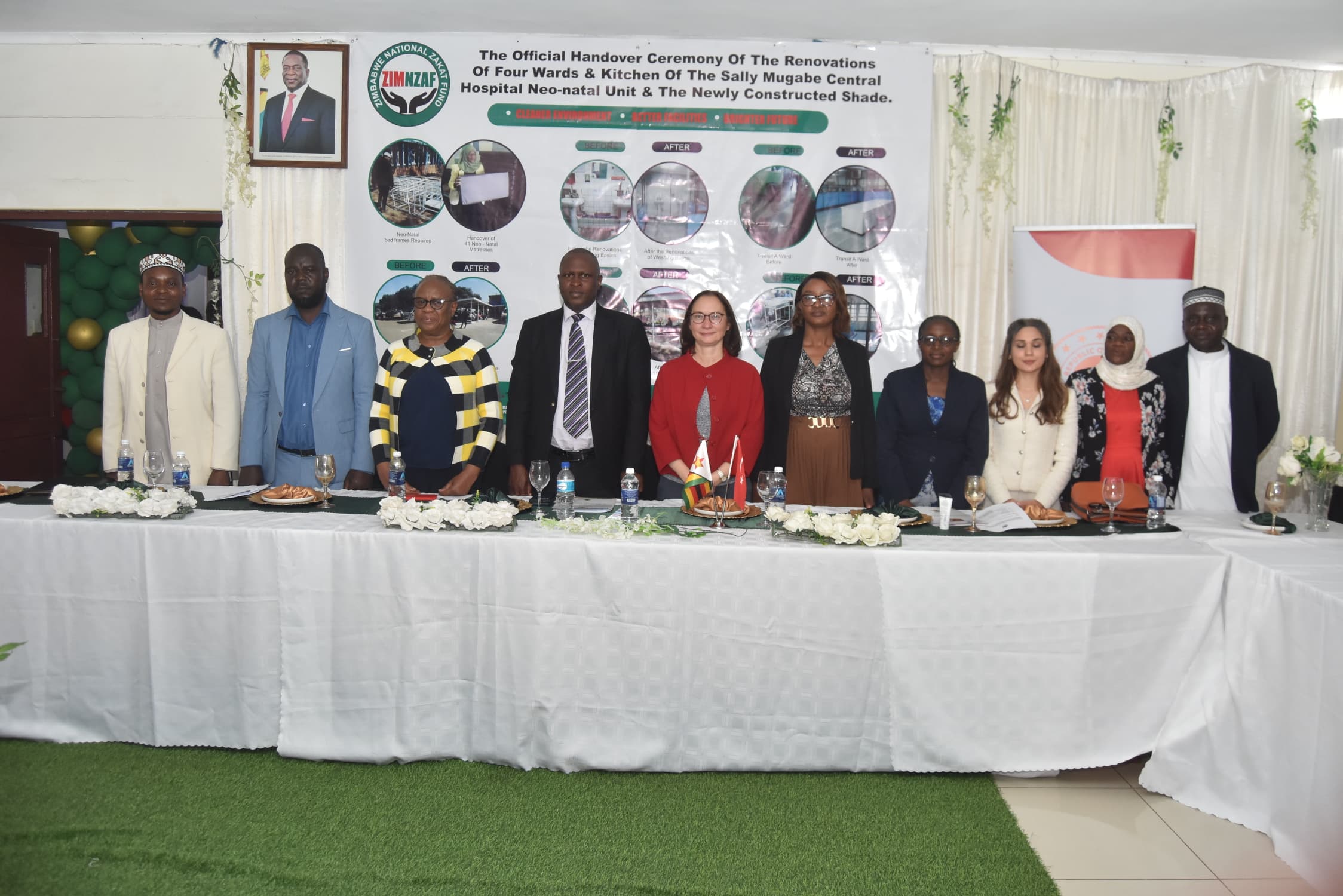
Deputy Minister of Health and Child Care, Hon. Sleiman Kwidini, made the call recently during the handover of refurbished neonatal wards at Sally Mugabe Central Hospital in Harare.
The project was funded by the Turkish Government through the Zimbabwe National Zakat Fund (ZIMNZAF), with support from Johanne Masowe yeChishanu, led by Madzibaba Moses Gwasarira.
Sally Mugabe Central Hospital is Zimbabwe’s busiest maternity hospital. It recorded more than 22,650 deliveries last year and provides specialised care to about 3,000 critically ill newborns annually.
Kwidini said the figures highlighted the need to keep improving the hospital’s infrastructure and working environment.
“These figures underscore the urgent need to continuously invest in quality infrastructure, modern equipment and a conducive environment for healthcare delivery,” he said.
Zimbabwe has made progress in maternal and child health, with institutional deliveries increasing by 84 percent, while the maternal mortality ratio has fallen from 651 deaths per 100,000 live births to 137 deaths per 100,000 live births, Kwidini said.
“I am pleased to note that under the leadership of His Excellency President ED Mnangagwa and the Second Republic, Zimbabwe continues to make significant strides in improving maternal and child health,” he said.
However, he said neonatal mortality remained a major concern, with 37 newborn deaths recorded for every 1,000 live births.
“The first 28 days of life remain the most critical period in a child’s survival,” Kwidini said.
He said tackling neonatal deaths required more than medical expertise, pointing to the need for safe and properly equipped facilities, effective infection prevention and control, reliable nutritional support and decent spaces for mothers and healthcare workers.
The refurbished neonatal wards are expected to improve infection prevention and control, strengthen the monitoring of newborns and provide a safer environment for critically ill babies.
“The renovated neonatal unit wards will significantly improve infection prevention and control, strengthen clinical observations and provide a safer healing environment for our most vulnerable patients,” he said.
The project also included the refurbishment of the hospital kitchen, which Kwidini said would support better nutritional services for mothers and newborns, including maternal recovery and breastfeeding.
A new maternity admission and waiting area was also constructed to provide expectant mothers with a more comfortable and dignified environment while they await care.
Kwidini said Government would ensure the upgraded facilities were adequately staffed with skilled personnel, including neonatal nurses, paediatricians and medical officers.
He also stressed the need to maintain the infrastructure and ensure the hospital had adequate medicines, equipment and other essential supplies.
“These investments will be integrated into the National Health Strategy 2026-2030 and NDS2, advancing universal health coverage and the goals of Vision 2030,” he said.
Turkish Ambassador to Zimbabwe Berna Kasnakli Versteden said the project was implemented with support from the Turkish Cooperation and Coordination Agency (TİKA) and ZIMNZAF.
She said the Turkish Embassy coordinated the project, which focused on improving the neonatal unit and waiting areas used by mothers and their babies.
“These improvements provide a more comfortable and supportive environment, reflecting a strong commitment of Türkiye to inclusive healthcare, supporting women and children,” she said.
ZIMNZAF National Director Sheikh Henry Balakazi said the organisation approached Sally Mugabe Central Hospital after identifying areas where assistance was needed.
The intervention covered the renovation of four neonatal wards and the hospital kitchen, as well as the construction of a new waiting area for mothers and visitors.
The work included plumbing, carpentry, retiling, painting, electrical repairs and bed-frame repairs, while 41 new mattresses were also provided.
Balakazi said the improvements would help address some of the infection risks associated with deteriorating hospital infrastructure.
“This intervention will help to curb infant morbidity and mortality caused by infections contracted inside the hospital due to dilapidated and malfunctioning infrastructure,” he said.
He said the project was also in line with President Mnangagwa’s call for faith-based organisations to complement Government’s national development programmes.
The renovations and construction work were valued at more than US$26,000.
TİKA provided US$20,768.10 towards materials supplied by Halsted Builders Express, while Johanne Masowe yeChishanu contributed US$6,048 towards overtime allowances for artisans working on the project.
Balakazi said the partnership between the Muslim and Apostolic faith communities was an example of how different religious groups could work together in support of national development.
“This is a clear testimony that in Zimbabwe, a nation of different faiths, we enjoy religious tolerance and peaceful coexistence, so much that we Muslims and Vapositori of Johanne Masowe Chishanu are working together to build our own country,” he said.